
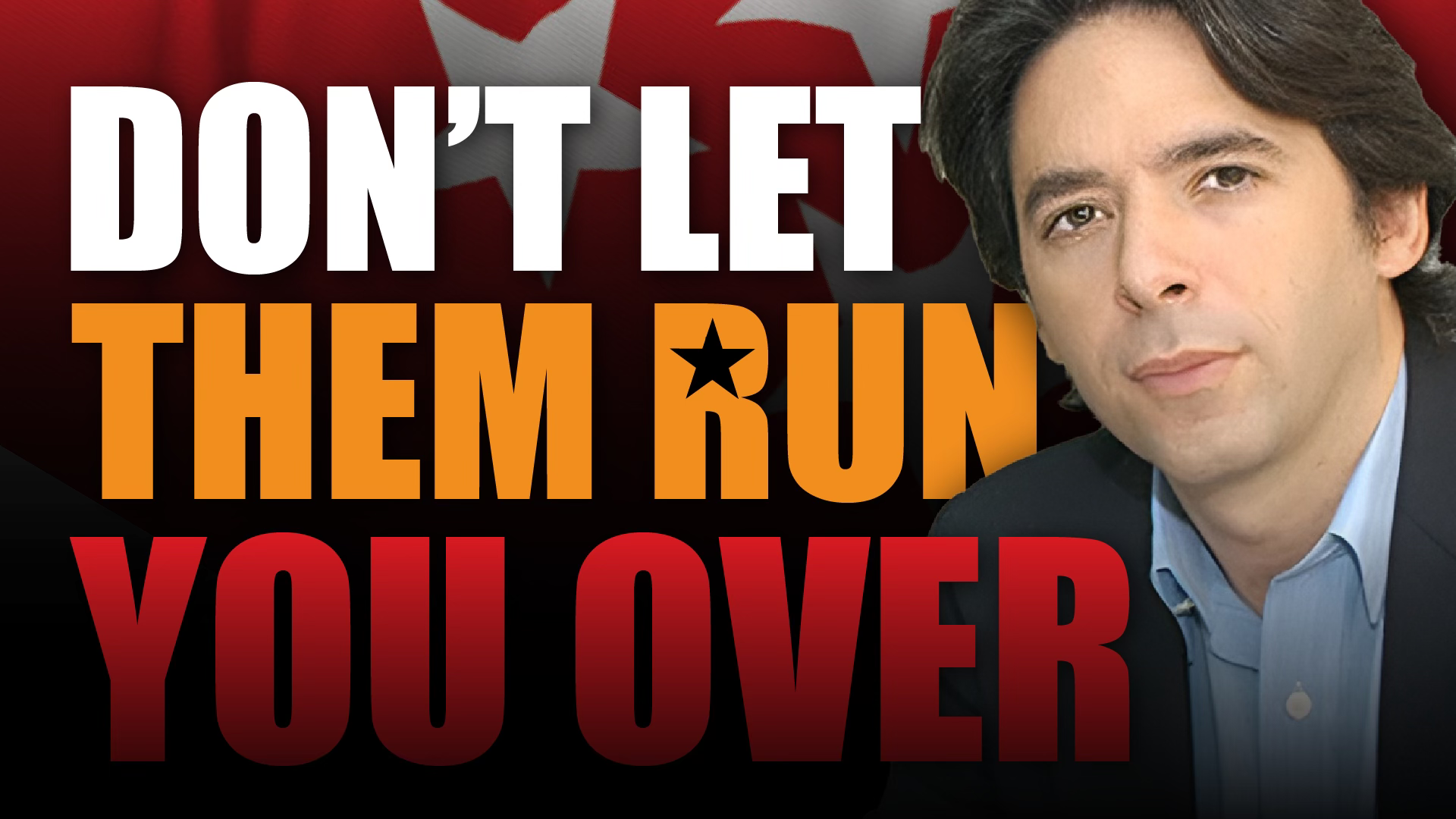
Percival Manglano is a lawyer, former Minister of Economy and Finance of the Community of Madrid, former member of the Spanish Congress, and the author of Pisando Charcos. He was a key operator in the implementation of the policies that became known as The Madrid Model.
While others wrote the manifestos that built what we now call The Madrid Model, Manglano was inside the machinery. Up late drafting the laws, cutting the budgets, sitting through the meetings, taking the eggs thrown at him in Lavapiés. This conversation is an attempt to understand how that machinery actually works, told by someone who spent twenty-five years operating it from the inside.
We begin in unlikely places. Manglano was born in London in 1972 to Valencian parents who wanted an English name for their child and settled on Percival. He studied in France, took a master’s at Johns Hopkins, and at twenty-five bought a one-way ticket to Indonesia. It was July 1998. Suharto had fallen two months earlier. Manglano arrived into a country teaching itself, in real time, how to be a democracy.
His political awakening came on a closed-off avenue in Jakarta, where he found himself between police and demonstrators, talking to both, until a whistle blew and the police opened fire. He picked up bullets from the street and kept some of them. “If you end up a liberal,” he tells us, “violence is a very important part of what you are against.” He was, he says, a liberal before he realized he was one which, he suspects, is more common than people admit.
From there, the conversation traces the long arc back to Madrid. Manglano returned to Spain in 2000, walked into the offices of the Partido Popular in February 2001, and has been there ever since. He passed through the FAES think tank under Aznar’s post-government rebuilding, advised on foreign affairs in the Spanish Congress, and in 2006 joined the regional government of Madrid which was the laboratory where Esperanza Aguirre and her circle were translating classical liberal ideas into actual policy.
Three through-lines emerge.
The first is the open society. Manglano was directly involved in crafting Madrid’s approach to immigration during the great wave of the early 2000s, when Spain went from less than 2% foreign-born to over 23% in two decades. Diego reads from a previously unpublished 2007 FAES memo Manglano helped draft — A Liberal Vision of Immigration Policy which laid out six principles, beginning with the most radical of them all: the immigrant is a person, not a member of a collective or ethnic group. From this single premise flows everything else: rejection of multiculturalism, equality before the law regardless of origin, refusal to plan ghettos, suspicion of any policy that treats human beings as blocs. The contrast with Catalonia becomes the episode’s most pointed case study in what closed societies actually look like.
The second is the discipline of reform under fire. In 2011, Aguirre took Manglano by the hand at her own re-inauguration and asked if he’d be her finance minister. He didn’t sleep that night. He took office in the worst of the Spanish double-dip recession, with the regional government’s revenues collapsing and Spain weeks away from a possible bailout. He approved three budgets in a single year. He cut expenditures in the middle of a crisis by going back to first principles: what is a regional government actually for? Health, education, infrastructure. Everything else, including the union privileges, the liberados, the artificially low tasas, the bureaucratic accretion of policies that were never the regional government’s job to begin with, was on the table.
It is also under his watch that Madrid passed the famous libertad de horarios — the law allowing shops to open whenever they wish. The article doing the actual liberalizing is one sentence, thirty-five words long. Aguirre had ordered it shortened. Manglano draws a comparison to the Thirteenth Amendment. The substance of liberty, he suggests, rarely needs much paper.
The third is the fear of power. This is the conceptual spine of the episode and of his book, Pisando charcos, an idiom that can be translated literally as “Stepping in Puddles” or a more meaningful translation: “Get your hands dirty”. Manglano is unusual among politicians in that he distrusts power in himself. He sees it as fire: useful for cooking, dangerous to hold too long, certain to burn the careless. He believes most people enter politics because they want to wield power. He believes the liberal alternative is to enter politics in order to use power for something else and then leave. The reforms are the point; the office is the cost.
Along the way, the conversation visits the Euro Vegas pitch to Sheldon Adelson at seven in the morning in Las Vegas (Manglano lost a hundred dollars at blackjack the night before; Almeida, the future mayor, won); the years in opposition to Manuela Carmena’s communist administration in Madrid, including the day Manglano, Aguirre, and a pregnant Begoña Villacís were physically harassed by far-left activists on the steps of city hall; the internal civil wars of the Partido Popular, the rise and fall of Pablo Casado, and the rifts that still shape Spanish politics; the citizenship-by-descent law that has put 2.5 million potential new voters on Spain’s electoral rolls; and an entirely sincere defense of Sylvester Stallone as a man who beat Hollywood at its own game.
The episode closes on a Robert Caro line that Rasheed offers: power doesn’t corrupt — power reveals. Manglano accepts the friendly amendment. The two ideas, he says, are the same idea seen from different angles. What power reveals, in his case, is a man who used it to change concrete things, distrusted it the entire time he held it, and was relieved to put it down.
This is a long conversation. It rewards listeners who want to understand not just what Madrid did, but how it was actually done.