
Full transcript below.
In this conversation, Rasheed and Diego sit down with Tyler Cowen to think through a question that sits quietly beneath much of today’s political noise: what actually compounds?
We begin in Spain, with a debate about regulating social media. But the real subject is not technology policy. It is institutional trajectory. How states expand. How societies adapt. And how temporary moral panics can produce permanent structural shifts.
From there, we widen the lens to the Americas. The United States and Latin America are integrating more deeply — demographically, culturally, economically — whether policymakers fully grasp it or not. Yet integration is not the same as understanding. Elites talk. Voters react. But knowledge often remains shallow, filtered through tourism, headlines, or ideological shortcuts.
A recurring tension runs through the episode: spectacle versus steadiness. Some countries produce extraordinary cultural vitality alongside recurring institutional fragility. Others appear dull but quietly accumulate gains. Growth in the low single digits may not satisfy reformers or revolutionaries, yet over decades it transforms societies more reliably than political drama ever does.
We also explore cities that are unexpectedly outperforming, the moral case for economic growth, the thinning — or perhaps evolution — of modern liberal thought, and how literature and cuisine reveal deeper structural truths about nations. Culture, in this conversation, is not an ornament. It is evidence.
If there is a shared thread between us and Tyler, it is this: Latin America is neither doomed nor destined. It is constrained in some places, underrated in others, and more dynamic than standard narratives suggest. The same may now be true of Spain.
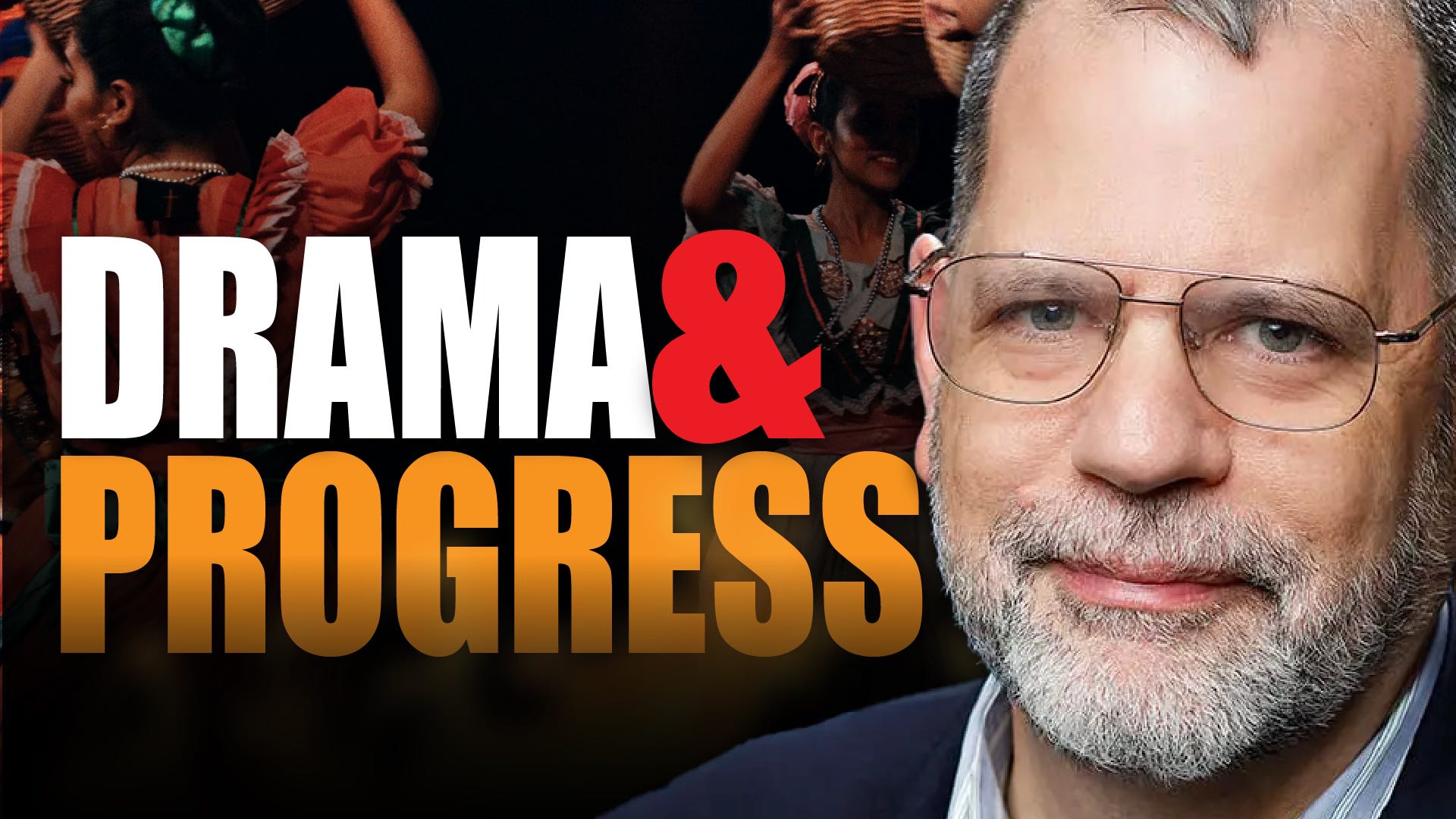
The deeper question is not who is rising or falling this year. It is which societies have found an equilibrium that can endure — and which are still mistaking drama for progress.
Rasheed: Hi everyone, and welcome back to the podcast. Today, Diego and I are actually joined by Tyler Cowen, who needs no introduction to listeners of this podcast. So that being said, the first question. I think Diego can start with the first question this time.
Diego Sanchez de la Cruz: Well, first of all, great to have you on Tyler. And look, Spain is considering a ban on social media for minors. Our Prime Minister has written an oped at the New York Times discussing why this is a good idea, and this government is not popular, but this idea seems to be quite popular. So please walk Spanish listeners and viewers through why this idea that may sound well-meaning actually is not at all something that we should be pursuing.
Tyler: I view it as a restriction on free speech. Once government gets its hands more on the internet it won’t stop. So for instance today the day we’re recording Discord announced that to get fully on Discord you have to produce full ID or somehow prove, demonstrate who you are. So anonymous posting is going away. This is for adults also. Once you start down the road of verifying a person’s age eventually you have to do it for everyone. Now I know people are concerned about the effects of social media on the mental health of younger persons. That’s a legitimate concern. I think it is up to the parents, not the government. But also any new communications technology there’s typically an adjustment period before people figure out how to use something properly and we’re going through that with social media. So I’m less worried than many are. And furthermore if you look at the very best research designs, basically they show there’s at most small effects on mental health of say teenagers. And the smartest most accomplished teenagers, that’s what they use to meet each other and to talk and become scientists or have startups at a young age. So if you truly could keep them off social media there’s a big cost to that as well. And people are not talking about the costs So those in a nutshell would be a few of my reasons.
Diego Sanchez de la Cruz: Rasheed, I was just watching the Bad Bunny halftime show at the Super Bowl, and I know you had some questions about the US and the Hispanic influence.
Rasheed: Yes, I did have a question about that. Tyler, right now, the US is one of the largest Spanish-speaking populations in the world. By some estimates, actually more than Spain. And with someone like Mark Rubio coming to dominate national politics, some early polling for the next election kind of shows he might actually become president.
And then just now you have a Bad Bunny dominating American culture without actually speaking English at the Superbowl show. And then Miami, some people like Patrick Collison say, is most dynamic place I’ve seen in the US in sometimes. So, at what point do you think it’d be useful analytically, to refer to the US in functional terms, as a Latin American country?
Tyler: It is right now. You mentioned the number of Spanish speakers we’re becoming much more interested in what you might call Latin America. In the Democratic party AOC is a leading candidate to run for president. She has a Hispanic background. when you look at foreign policy whether you like it or not it’s an area where America can do things and has a reasonable chance of succeeding. So Venezuela, Cuba on the agenda. Plenty is gonna happen over the next few years I hope it goes better rather than worse. Mexico is our eternal neighbor and will always be important to us. So the fundamentals are on the side of people thinking and talking much more about Latin America over time. When I say people Americans, but of course in Spain too right? Your own migration streams show this.
Rasheed: That’s right. And do you think there actually has been, you know, from your perspective, a meaningful increasing good conversations regarding Latin America or just more of an elite conversation?
Tyler: I think there are many more conversations about Latin America I don’t think many of them are good. One problem is that the non-Latino North Americans typically do not know Spanish. Another is that they tend not to be widely traveled in Latin America. Large numbers of them have been to Cabo, have been to Cancun, have been to Costa Rica, maybe Buenos Aires. It’s not that they haven’t been anywhere. But those are in some ways misleading pictures. And to simply do something like go to Comayagua in Honduras which no one really thinks or talks about and you’ll learn a lot more than the trips most people take. A few days ago I was offering to take someone on a trip to El Salvador for three or four days, as indeed you and I have done with a few others Rasheed. You’re seeing real stuff when you do it that way. There are plenty of ways to see real stuff that are quite safe, and North Americans unless they’re from those places, are dreadfully behind on that score.
Diego Sanchez de la Cruz: We’ve been arguing for the need to bridge that gap and communicate more among Spanish and non-Spanish audiences in the Americas. One of the things we’ve talked about though, is how some of your writing resonates beyond demographics, of course. And some of your books that have not been translated to Spanish have had indeed some influence at the intellectual level.
I’m more specifically referring to “Average is Over” a few years ago and more recently, “Stubborn Attachments”. Now, I’m curious to know which ideas would you pour into these two books do you think still hold and still stick to this day?
Tyler: Let me first note, I think both of those have been translated into Spanish. So “Stubborn Attachments”, there’s a not very well-known Guatemalan edition.
Tyler: I believe it’s come out or is in some way available. And then “Average Is Over” I don’t remember the Spanish language title but I think that’s in Spanish language. But again a lot of the people from those countries probably just read it in English earlier on. My main argument in “Average Is Over” which is from 2013 is that artificial intelligence is going to revolutionize the world and end our productivity crisis. I think that prediction nowadays looks very good. I was one of the first people to be making that claim and I go in detail through how I think the world will work and you will need to be what I call a centaur that is very good working with AI. And the people who are very good working with AI will do incredibly well, and if you’re not you’ll have to make a lot of other adjustments. Now “Stubborn Attachments” is a book from 2018 with Stripe Press and there I argue that what’s really important for human wellbeing is economic growth. Economic growth should be a moral imperative that’s a very important point for really all of Latin America but any country. If you look at East Asia say, which to a considerable degree has realized its potential, many more countries should be trying very hard to follow in their footsteps
Diego Sanchez de la Cruz: You mentioned El Salvador, Rasheed. I know you guys went on a trip there and I know you have some questions.
Rasheed: Tyler, if El Salvador were to become a success story, what would it likely be a success at first? Manufacturing, migratory investment, investment tourism, or something more unusual? Because those typical answers feel like maybe they have missed the boat.
Tyler: I think El Salvador has turned itself into a very safe country which is great news. I think you and I both saw that when we were there. I think under all scenarios they have a very hard time becoming much richer. So I don’t think it’s manufacturing through no fault of their own. But most of the world is de-industrializing. So manufacturing is not a source of growing employment due to automation. But there’s other issues for Central America such as scale and the cost of electricity. El Salvador is not the best in Latin America for either of those compared say to Northern Mexico. So I don’t see what its relative advantage is. And it’s just a small place. I checked with ChatGPT. O
ne estimate places about third of the population, living in the United States on average. That’s probably the more ambitious, one third. So there’s considerable brain drain. I do think in terms of levels they can do much more with tourism. They have an entire Pacific Coast which is quite underdeveloped, and could be developed very fruitfully. Sell condominiums, have people do more surfing. Try to have something a bit more like the next Acapulco, but even there you’re competing against Cancun among other locations and it will boost their level but it won’t be a permanently higher rate of growth.
And that’s the case with many touristic developments. They don’t self compound forever and give you many other productivity improvements. So I expect El Salvador to do much better but I know a lot of people who read Bukele on social media and they think it’s about to be the next Singapore or something and I just don’t know how they’re gonna do that under really any scenario. I do think it will improve and they’ll get more foreign investment and more tourism.
Rasheed: How much is “much better”? That’s doing a lot of work there.
Tyler: When you look at the Pacific Coast and you and I sat right next to the water. So that could create quite a few jobs. But in the longer term steady state I think they’ll have a hard time averaging more than 2% growth. So they can attach themselves more closely to the US economy. They use the dollar and let’s just assume their governance does not go crazy. That’s another risk right? So Bukele or whoever succeeds them could overreach. The checks and balances the constitutional protections there seem quite weak. Another possible risk there that even despite his best efforts the country becomes dangerous again. You look at Costa Rica which had been quite safe and did all the right things, and is larger and has many more resources and that’s now becoming a more dangerous place because it was targeted by external, in some cases Mexican drug traffickers. And that could happen to El Salvador as well. So even if think the current campaign is gonna work forever it doesn’t mean the country stays safe forever. It’s not really in a very safe region. So that’s a side risk which will also keep down foreign an investment. I don’t know I’m I am definitely seeing the upside but not super duper optimistic there.
Diego Sanchez de la Cruz: That cycle of violence that you bring up it’s a common and very recruiting topic in many Latin American countries. You think the worst has ended. You think that things are ticking up and then boom you end up right at a bad place. Colombia comes to mind with so much advancement from the two thousands all the way up to the mid 2010s.
But the situation right now, it’s obviously worse. Ecuador also comes to mind, traditionally very safe compared to other regional standards. Right now I think it was ranked last year among the 10 countries with the highest homicide per capita rate in the world. So I think you make a very good point there.
This idea that crime is gone, well it’s gone for now, but don’t take that for granted. Rasheed has some interesting follow up.
[00:12:13] Tyler: Very few of these nations have really completed what we call nation building
[00:12:19] Tyler: You could say Uruguay has. Even Costa Rica never quite did. So Uraguay, Chile, I would say Argentina. Panama’s complicated. It’s certainly gone well but it does feel to me like about five different countries. Only parts of the Southern Cone have done that and I think that’s why violence keeps on reemerging.
[00:12:51] Rasheed: I do have some Panama questions. We’ll definitely get to that. I don’t think people talk enough about Panama. But before I do that, I do have this other question.
[00:13:03] Rasheed: Colombia we’ve mentioned a bit. Given you don’t drink coffee, Tyler, I’m curious if there is a feeling about how much cultural code you can crack in Columbia.
I mean, I could also say the same about Ethiopia, but we’re gonna ask for Colombia.
[00:13:28] Tyler: I’ve been to Colombia, I think four times. Every part of it I go to feels like a different country. If someone told me I went to a new country I just would nod my head and continue along my way. It’s not very well connected ideologically, politically, socially it’s quite scattered. There’s Bogotá that feels like its own country and they’re very pro-business, the people pro-American. Until Petro they often made some decent electoral choices but it never fell into place for them. But oddly enough in spite of all that violence for decades they had pretty steady economic growth. When you go around Colombian cities parts of them look pretty developed from a retail point of view. I’ve always been optimistic about the place, so I’m hoping that the policy retrogression under the current government is temporary and they can just keep on something like 3-4% growth. You mentioned Ecuador and there’s also Peru which is a mess. Peru is still projected to grow 3-4% this year under conditions that if you describe them no one would be happy about. Ecuador could be growing 2.5-3% under normal projections. That’s hardly spectacular or impressive. But if you can be that much of a mess and still grow and I think Colombia’s in that position, the optimistic scenario is they just keep on growing pretty steadily and eventually they can afford to clean up the whole mess. And I’m always hoping waiting It’s never come I wanna see it happen before my time on Earth is over. I’m no longer sure I will, but in my heart of hearts I say if they can grow 3-4% under these conditions ultimately they’ll cross the threshold That’s my bold case for many of these countries.
[00:15:21] Rasheed: I wanna bring back a question that you actually asked Brian Winter some many podcasts ago where you asked him “If you you, and let’s say your wife, you’re 30 years old, you had children and you were to move somewhere in Latin America. You speak Spanish also Portuguese. You have young kids. Where would you move to?”
[00:15:51] Tyler: Putting aside what my job might constrain I believe the best place to live would be Panama City. You have a lot of very good air connections to the rest of Latin America and the US. It’s safe enough. Panama City is a real city, there’s good food there, no obvious big downside. Buenos Aires is a competitor but there’s too much economic trouble and I don’t feel it’s entirely cleaned up by Milei. And there’s just more purse snatching there than say in Panama City. Chile is a contender but it feels provincial to many outsiders, in that if you’re not part of the Chilean elite circle that gets together and takes tea and eats cake together it’s a little boring. So I think I’d say Panama City. My personal love is Mexico. Where in Mexico? I’m a little stumped. I don’t think Cuernavaca is a crazy pick. And even Mexico City is much safer than it used to be. So they would deserve serious consideration. But for the time being I’ll say Panama City.
[00:16:59] Rasheed: Well, I think that’s the correct answer. I would add, Panama City has very good and not expensive private international schools for children. And that is a, I think a very big win, especially in Latin America. You have that much more cosmopolitan education. And again it’s actually a very good price. So I think it’s point that people tend to not obviously know. Diego you must have some follow up on that.
[00:17:42] Diego Sanchez de la Cruz: Panama, if you want to throw your hand in there, Rasheed because we always go back and forth about how it may be the country that gets overlooked the most whenever we just venture into the regional conversation. It has GDP per capita according to some of the most recorded measures.
But it ranks quite poorly also when you talk about, you know, corruption and good governance. So on the one hand that would seem like a concern. On the other hand, it would seem as okay, the politics are maybe not that clean, but it doesn’t seem to affect the, the overall wellbeing of the country. So, Tyler, I don’t know how you feel about that.
Is that a paradox or is it just coherent because we just have the church and state, or in this case, politics and the market separated enough, so as for corruption not to affect economics that much.
[00:18:28] Tyler: It just could be that a lot of countries in the world are becoming more corrupt, that’s bad. But in relative terms it will not militate against Panama. I think an important factor that for me would be a plus, is just that Panamanian culture is not itself that strong in a way. Your kids will not grow up as Panamanian. They’ll grow up as say American, North American if that’s what you are. Whereas if you bring your kids up in Mexico, Mexico is a huge strong vibrant intoxicating culture. There’s nothing wrong with having your kids be part culturally Mexican but it’s a choice. In Panama City it feels to me a bit like bringing your kids up in Dubai. Your kids are not gonna grow up to be Emirati per se, they’re gonna be Swiss if you’re Swiss or English if you’re English and so on. It’s an advantage and or and disadvantage of living there. It’s why I personally would prefer Mexico but I think for the kids they’d be better off in Panama.
[00:19:24] Rasheed: My husband might have some arguments to give.
[00:19:29] Tyler: He’s not really gonna contradict me is he?
[00:19:33] Rasheed: Probably not. Probably not.
[00:19:37] Tyler: You think about something like Panamanian music, cuisine cinema, there’s not that much. People talk about Mexican slang. They don’t talk about Panamanian slang. I’m sure there is some. You go to David in the north it’s just completely different, or the Caribbean coast. I think it’s a very weak national culture. That’s not true in Mexico at all. Mexico has strong regional cultures but there’s something fundamentally national about it.
[00:20:17] Tyler: I don’t go for Lucho Libre and so on but you can imagine your kid doing that.
[00:20:23] Rasheed: Diego, you want to add something there?
[00:20:25] Diego Sanchez de la Cruz: Well, my son actually loves Mexican Lucha Libre, so, and he’s not even been to Mexico yet. So obviously it is a very national and differentiated culture. And I can see how that comment that you made may actually be a limit on the growth on the appeal of Chile, which in fact is indeed a very well established economy in many areas.
It is much more developed and solid than most countries in the region, but there is that certain provincial feeling of the elites, and that can indeed be a limiting factor. We’ve argued too about how Madrid here in Spain is booming, thanks to not having such a strong of an identity as perhaps Catalonia and Barcelona, where that identity has actually proven to sort of exclude talent flocking and not make them feel at home.
But before we move on over to this side of the ocean I think Rasheed, you had some questions about coffee that you wanted to, to throw out, right? Best coffee in the region. I think it was.
[00:21:26] Tyler: I have no questions about coffee. Do you Rasheed?
[00:21:29] Rasheed: I had a question about coffee. It was the early one about Colombia. Especially this country that has a very strong coffee culture, Ethiopia is actually probably even stronger than this. Given that you don’t actually partake in coffee, do you actually lose something from understanding the actual cultural codes that are so in ingrained in detail like Colombia, parts of Brazil and Ethiopia as well?
[00:21:57] Tyler: Sure. Maybe it’s more important is that I don’t drink alcohol. I probably lose a lot more that way. Because people become more different when they drink alcohol than when they drink coffee. On the other hand I pick up things that other people don’t and in a world with division of labor if I combine my knowledge with theirs I still like my approach. If I were the only person doing it that would suggest I should drink some more.
[00:22:20] Rasheed: Yeah.
[00:22:21] Diego Sanchez de la Cruz: So you mentioned dollarization when we were speaking about El Salvador and Panama is also doing quite well thanks to that monetary stability. Argentina, should it dollarize? What do you think Milei should be doing to advance the agenda? ‘cause he’s done quite good in these first two years, but a lot of room for maneuvers still.
Still a lot of room for improvement as well. What do you think should happen with the monetary policy?
[00:22:47] Tyler: If they could dollarize that would be fine. But I saw an estimate about two years ago that it would cost them $30 billion. That number’s probably changed. It’s still a lot of money for them and I don’t see where they’d get it. So it’s a fine system for them. It’s worked well for Panama, El Salvador and Ecuador but it doesn’t solve the basic problems of those countries. And Argentina’s basic problem is fiscal. And for all the good things Milei has done, their hole is so deep and they’re still not in the clear. They rely on volatile commodity prices. They claim balanced budgets every 10-15 years. They always turn out to be wrong when commodity prices collapse. Their reserves typically are quite low compared to say Brazil per capita and they have terrible interest groups who are very willing to take to the street. And I don’t believe those problems have really gone away. I don’t blame Milei at all for them but whether he can be in there long enough and do enough to change the political culture, to truly put them on a sound fiscal footing I would say is still very much an open question.
[00:23:55] Diego Sanchez de la Cruz: You had some interesting comments about Argentina as we were preparing for the podcast, so.
[00:24:02] Rasheed: I mean, I have, I have many things one could say about Argentina. But Argentina has these extreme cycles that really revolve wrong political drama. And then I think also famously Argentina over produces psychoanalysts. It’s actually the highest per capita in the globe. I’m curious, is there some underlying trait between extreme political drama and this extreme need to psychoanalyse yourself all the time?
[00:24:35] Tyler: Absolutely. And this gets to the import of culture, the obsession with Ava. There’s something about Argentina that for a long time has been psychodrama. It helps them produce so many excellent writers and dramatists so it has an upside but the country is a soap opera. The people have a reputation for being quite narcissistic. Maybe that’s a superficial way of describing it because they also have this incredible ambition. They’ve created quite a few unicorns even if those are realized in other nations besides Argentina. But yeah drama there is high. I would say that in Mexico tragedy is high, tragic drama. Argentina is like soap opera drama. And they’re both problems when it comes to public finance. Chile drama is very low right. A sort of boring point. But it does mean they can stabilize things.They’ve gone through some terrible political events. “We’re gonna rewrite the constitution.” “We’re gonna elect all these leftists.” “Some big chunk of us are gonna pretend we’re totally woke.” But they’ve actually gotten through that okay. And none of that was ideal. But it’s remarkable that they’re now back on some other track again and still have a chance to themselves. Boring can be good.
[00:26:01] Diego Sanchez de la Cruz: Costa Rica is an another political system known for being, you know, very boring, not much going on. And Chilean Nobel Prize in literature winner, Mario Vargas Llosa, argued that they were “exercising their right to idiocy” after getting things right for many decades. The thing is they did exercise. They did not actually change their constitution and things seemed to be swinging back into more sensible policymaking. So we wanted to also bring the conversation a bit closer to Spain.
[00:26:33] Tyler: One thing on the Caribbean… Dominican Republic I think is relatively quite boring compared to say Trinidad or Cuba or Haiti. But it’s done better right? So that’s another example. But anyway back to Spain.
[00:26:46] Diego Sanchez de la Cruz: Well, before we go to Spain, let me tell you that every single socialist government scandal in Spain seems to end up in the Dominican Republic. Although we thought of it as quite a boring country, the recent developments are showing up, that might not be the case.
[00:27:05] Tyler: I wouldn’t say their politics is boring but just being in the country to me is a little flat. It’s really pleasant, I love the beans. People are super friendly, great weather, awesome beaches. But I’m way thinking “oh I wanna go to Trinidad again rather than the DR.” Or Haiti, I’ve been to Haiti five times and the DR twice. What does that tell you?
[00:27:28] Diego Sanchez de la Cruz: Yeah, well, Madrid Rashid calls it home for two years now. I moved here when I was 18. I’m 37, so more than half of my life here already. And it seems to be succeeding along several margins at once in a way that feels kind of unusual to replicate elsewhere in Europe. So I’m curious to know what’s your take on that?
Do you think Madrid is actually doing well? Did you find it a special, interesting vibe when you visited? What was the general experience that you had?
[00:27:56] Tyler: I was there less than a year ago. It was probably my fifth visit to the city. I think it’s in the running to be Europe’s best and most successful city. That’s a subjective judgment but it’s not crazy to claim that it is and that’s a first. So for cuisine, the arts, being cosmopolitan open to the world, vibrancy of walking on the street, it’s just excellent. It does not cost a fortune to be there though you can spend more if you wish to. It’s one of the very best places in the world to spend a week or two. I think it’s way into the top tier.
[00:28:37] Rasheed: Given you’ve actually been here, you know, have you had a temporal adjustment? At what point did you start to realize that? The last visit, the second last visit?
[00:28:50] Tyler: The first visit was the 1990s and then it felt somewhat moreish to me and dark, and fascinating, and sluggish and it was fun but you wondered since it was hovering between older Franco times and some unknown future. I also was there at the height of the financial crisis when things just felt awful. The streets were empty, everyone was frowning. I always thought that was temporary but it still makes an impression on you. I would say really just my very last visit, I had read plenty and I follow Spain so I wasn’t surprised by any of it. But to see it it much more real.
[00:29:45] Rasheed: Well, I agree. I think Diego would agree too.
[00:29:48] Diego Sanchez de la Cruz: Yes!
We voted with our feet and we’ve oped and written books about this. But it’s very interesting because I think that your grasp on the city and the transformation it has undergone, it reflects what’s really happened because Madrid certainly turned things around in the last 20 years or so. The financial crisis was indeed a stop-go sort of moment for Madrid, not for the rest of the country, which quite frankly, has remained stuck in that mentality and not done as well since 15 years ago, all the way up to today. But Rasheed brought to my attention while preparing for the podcast, that you have some curiosity, some interest in the, what we call the School of Salamanca, which is something that Rasheed has also done, you know, his research on.
Because, you know most people when they arrive in Spain and they start to connect with, you know, people that appreciate markets and open societies, they, they tend to think that these ideas simply emanate from other areas and just made their way here to Spain. But it’s true, we have quite a deep liberal tradition that starts with the School of Salamanca back in the 16th and 17th century.
[00:31:03] Tyler: You have las Casas writing against slavery and for the rights of the indigenous. That has been seeping through to other people. But Vitoria, Molina the ones you might call almost the economists, moral thinkers, others grossly underrated. I’m never sure how liberal they are I’m pretty sure what they wrote was liberal. But what they actually favored relative to their time I think is a bit of a mystery. But they understood what we now call marginal utility theory, laid some foundations for modern economics, were excellent on monetary economics; things like the quantity theory of money, causes of inflation, hyperinflation in Spain at the time and were good broadly moral philosophers. So they’re very impressive. And last year I visited Salamanca and got to see some of the rooms and desks even where they did their writing. This made a great impression on me. This was wonderful. Salamanca for me is one of the most beautiful smaller towns in Spain and it’s easy to get to and everyone should go there. That’s one of my plugs.
Diego Sanchez de la Cruz: A two hour trip from Madrid.
Tyler: We had rental car but there’s a direct train line, right?
Diego Sanchez de la Cruz: But trains in Spain right now. Let’s not go there.
Tyler: What’s the problem?
Diego Sanchez de la Cruz: Well just chaos, the delays and actually a few train wrecks with dozens of dead people and just very poor management of the infrastructure that was once known to be great.
[00:32:39] Tyler: What’s caused those accidents? Was it coincidence? Was it cheap construction? Because progressives were telling me for 10,15 years Spain builds train lines and infrastructure so cheaply, this is great And then I saw these three or four train crashes and I just start scratching my head like “What’s going on here?” Do any of you know?
[00:32:57] Diego Sanchez de la Cruz: Well Tyler, I think the, the fact is that a network, like the one we built for our high speed trains is actually very costly. You can choose to have a very costly, high speed train network, but you need to acknowledge that. And Spaniards have been used to not paying the full price, and originally just subsidizing the price.
And then as the bill became bigger, more expensive, the investment in the upkeep, the infrastructure started to go low and low and low, and because there was not enough capacity from the state to add more trains and put more trains in circulation it was opened up for competition in some connections.
Like for example, the one where there was this massive train wreck, which connects Madrid all the way to Sevilla and Malaga in the south in Andalucía, Suddenly you have many more trains, but no additional investment. And you have private operators competing with public operators in the service of the train transport, but you only have a state monopoly with very low investment in upkeep, that is run by the government.
So in terms of how to keep this infrastructure, the rails themselves, that unfortunately has led to worsening performance in the last few years. And this dramatic event a few weeks ago was probably the ‘aha’ moment for many people that were still not convinced that this world class infrastructure is now looking kind of third worldly in many aspects.
[00:34:29] Rasheed: Also another point to that as well. I know some of the pieces that you’re also referring to Tyler. And there is a distinction between the metro systems of different cities and then the high speed trail. High speed rail is managed by a public company Adif. That’s separate infrastructure, separate procurement, separate everything from how the Metro Madrid or the Metro Barcelona, how they, how they function, how they are managed.
So they are actually different things. So the Madrid Metro public administration management is a lot more cost efficient compared to the long route high speed train. But both things are true at the same time, when it comes to Spain which is, you know, one of the benefits of having the such strong regional autonomy for planning all these different things in the economy.
I want to still stick on the Salmanca thing. So one thing I realize, especially when talking to people here like Diego and other people that are very into liberal thinking is compared to the way how very young people now who would call themselves liberals or libertarians, how they think about the metaphors they use. They use Bitcoin, they use crypto, they use these kind of things where the older people in Spain tend to use things like, you know, the Salamanca school and go back to the Cádiz constitution from 1812 and those kind of things.
I’m curious if you think that the thinking around what you call liberalism today is as thick as the things you will have read about Salamanca or that time period in general when it comes to how they wrote about liberal thinking.
[00:36:27] Tyler: People seem to read fewer books, at least fewer books of a particular historical kind today compared to when I was younger. So that to me makes classical liberal thinking thinner, in some ways better, more future oriented, more dynamic, more flexible. But also thinner and more superficial. We’ll see how that bargain turns out, I wish everyone knew the Salamancans and when I was a kid it was actually amazing to me how many people I met who knew the Salamancans. Like you could say “what do you think of Suarez on tyrannicide?”, and they have an opinion. That’s unthinkable today unless it’s maybe you two.
[00:37:09] Diego Sanchez de la Cruz: I must say that some of the founding fathers of the US were very familiar with their work, and you can trace their their knowledge of other authors. John Adams for example, had a copy of a series of books by Juan De Mariana. But then also of course Thomas Jefferson, James Madison, all of them were acquainted with these very old authors that still today, reverberate here locally, but are quite unknown abroad. So I wanted to ask you for some also some marriage counseling. I’ve seen the pictures of your office. When I try to stress how full of books that looks. I can’t. So I just urge our listeners and viewers to just Google that and see Tyler essentially surrounded by towers of books.
So my wife complains that I have too many, and trust me, compared to you, I’m a real amateur. So what would be the best relationship advice you can give me on how to negotiate a dynamic between space for these books and domestic harmony?
[00:38:09] Tyler: It would be easy if you could just trade in marriages right? But very often you can’t, that’s the problem. I have agreed to keep most of my active book piles in one part of the house that has led to temporary peace which I hope is enduring. That’s the best I’ve managed. I would’ve preferred a more Coasean solution like “you let me do this, I’ll let you do that”. But again trade in marriage often backfires or just isn’t possible. Make a concession, admit your partner is correct and try to get as good a deal out of the concession as you can.
[00:38:48] Diego Sanchez de la Cruz: Fair enough.
[00:38:48] Tyler: When I try saying things like “it’s a privilege to live amongst all these books and when visitors come they can admire the titles”, that never works even though we have a lot of quite intellectual visitors, it does not work.
[00:39:05] Diego Sanchez de la Cruz: So we can, we had some questions for you also about culture. And both, both Rasheed and I are big on the idea that some cities, some capitals around Europe, for instance; you can see that they punch above their economic weight culturally. One that pops to mind is Berlin, for example.
Not much dynamism in terms of economics but very, very interesting cultural scene. Do you think there is other interesting examples of this? Instead of debt to GDP or tax to GDP, we could just call this the ‘vibe to GDP’ ratio of which cities are overperforming in terms of culture, although they may not be economic powerhouses.
[00:39:45] Tyler: So many German and Swiss cities do that. Maybe not Braunschweig but you could name a few dozen cities in Germany that are culturally significant. Berlin is still pretty big and all the go a lot of the government workers are there but take Kassel which puts on Documenta. That’s a small city. They have an incredible Rembrandt collection. They are significant force in the contemporary art world. Other things go on there. Somewhere like Zurich, I’m guessing population is still below half a million or it can’t be much above it, incredibly culturally important Basel, Bern and so on. So something about that part of the world, you have federalistic funding and also cultural structures in Germany and in Switzerland and it seems to quite matter. And then you have these very well educated high taste populations. Imagine Basel actually had a referendum as to whether the local museum should buy a particular painting by Picasso. And this was debated earnestly by the citizens and they ended up buying it. Can you imagine what that would be like in the United States or even many other parts of Europe?
[00:41:03] Rasheed: What about that same question in Latin America?
[00:41:09] Tyler: It’s a lot where you are. Argentina is relatively European in this regard but a lot of it is and is becoming all the more like North America. I think in many parts of Latin America, the European influences are fading.
Especially Central America, becoming more and more North Americanized. Maybe not in bad ways but you see the ties to Spain and the architecture obviously the language the history but with so many of them in the United States that’s just the dominant force.
[00:41:44] Diego Sanchez de la Cruz: I see that balancing act when I travel to Quito, my wife is from Ecuador. So when we go back home you see how the, the balance in Quito can still feel quite even between the Spanish and the North American influence. But then you venture into Guayaquil on the coast, and you can clearly see that the Spanish influence has faded and it’s just a remnant of the past.
Some relics of it, but maybe there, but just the culture, the entire of the city feels very American to me, very North American to me. And speaking of culture were discussing Rasheed, these authors that we know you’re familiar with.
[00:42:28] Rasheed: Yes. I know that you’ve said this several places, not several places, but you’ve been, you read quite a lot and you were influenced quite a lot by people like Borges or Rulfo or Cortázar, or Garcia Marquez and Neruda. And if you were choose one or one group of super important work from them to have a conversation about political economy in Latin America, what would you choose?
[00:43:03] Tyler: I’m to have a discussion with the author about political economy?
[00:43:07] Rasheed: No to, to kind of use it as a text for a group conversation, but people who are into politic economy.
[00:43:18] Tyler: I don’t know maybe Bolaño. No, Borges would be my favorite but it’s deliberately quite removed from political economy. If you want the political economy of rural Mexico then it’s Pedro Páramo for sure. But that’s not what most people mean by political economy. But it’s brilliant on rural Mexico. I think it gets at this point of Latin America never having congealed even at the level of the nation that the fiction is so disparate. There’s not a single thing you can pick that fills that bill. And Marquez of course he was a Castro fan in a bad way. It doesn’t seem he ever repudiated it. He just had terrible views on almost everything. But he’s a great writer and he has this sense of the romantic in the fiction and actually the nonfiction reporting as well. But it just leads you so badly astray in politics. Maybe that’s the lesson from him, is that the standards for good fiction and good nonfiction beliefs are almost diametrically opposed. But you only need to learn that once right?
[00:44:24] Diego Sanchez de la Cruz: Just on a side note, I live in Pablo Neruda’s former home in Madrid. He was based in Madrid for a while, and he wrote a poem to the house where he lived here inthe city. It, it was called ‘La Ca Flores’, the House of the Flowers. And that is actually where I’m sitting right here.
So Neruda used to be somewhere around. We don’t know exactly whether it was my apartment or my neighbor’s apartment, but we do know he was sitting on the last floor of my number on the street. So I won’t say the number. We don’t want, you know, people knocking on the door.
[00:45:05] Tyler: He was a Stalinist as you know. He was if anything, worse than Garcia Marquez.
[00:45:09] Diego Sanchez de la Cruz: Oh, he wrote a poem called ‘Ode to Stalin’, so I guess that says everything you need to know about his politics. But his poems certainly do pass the test. Like you said, I don’t think this diametrical opposition between what they bring forward in terms of learning the arts and then what, what leader can you learn in politics, I think is-
[00:45:34] Rasheed: But then what about Vargas Llosa? This is the point because Vargas Llosa meets the requirement of obviously a esteem author from Latin America with a very good political orientation. But I remember, Tyler, I think you mentioned at some point you didn’t really get into his work as much, or did I misremember this?
[00:45:59] Tyler: I think he’s a very good author to read. I like him very much. But on depth a smidgen below the others or maybe more than a smidgen. So “War at the End of the World” is probably his best book. It’s wonderful. I recommend it to everyone. But it doesn’t change how you think about things. Books like “Aunt Julia and the Script Writer” which is the most fun read. Again literally about a soap opera, reading It is like a soap opera. It’s almost genre fiction but doesn’t come close to the others. Maybe “Conversation in the Cathedral” is the one by him that has the greatest depth but I find it very hard to read in Spanish. It’s too hard for me English and doesn’t make that much sense. I will try it again in my life but his claim to fame might ultimately be that book and I’m just not sure how well it does. That’s my own limitation not his.
[00:46:57] Diego Sanchez de la Cruz: The journalistic approach by both Vargas Llosa and Garcia Marquez is something that is very remarkable. Of course, Garcia Marquez threw a lot of fantasy into his fiction. While Vargas Llosa kept it a bit more realistic. With time, both men who were friends became distant because of the Cuban Revolution.
Both were original supporters. Vargas Llosa quickly did his homework and checked what was really going on and became disenchanted with communism. And the Garcia Marquez actually fell in love with it and up to very late in his life, still had his own mansion available for him in Cuba. Obviously the morality of that is there. But of course for the literature no one is doubting the merits of either of them because they were very good authors.
Rasheed: I’m curious, what is it about “Conversation in the Cathedral” you find so challenging in some sense?
Tyler: My Spanish isn’t good enough is quite simply the issue that. And that also means I can’t tell you what I find so difficult in it. But it is polyphonic right?
Tyler: “Conversation in the Cathedral” which I think only has one English language version. Again if there’s another translation I’ll buy it. I’ll try it again when my Spanish is better and I hope someday my Spanish is better and just keep at it. Or maybe when I’m 83 and retired I’ll just sit down with the English and Spanish language versions and spend a full month with it and do nothing, that else might work too.
Tyler: Garcia Marquez in particular underrated, cause everyone reads “A Hundred Years of Solitude” and that was a wonderful achievement but I don’t feel it’s aged that well It’s been copied too much. It’s a bit like looking at the Mona Lisa. And I think “Noticia de un Secuestro” and “Vivir Para Contarla”, those are phenomenal works and they’re not much discussed. And then his short fiction is better to me than say the famous novels. That doesn’t translate well but that I can read in Spanish and people don’t absorb that so much in North America. So he’s considerably underrated even though I really do not like his politics.
Rasheed: Did you read the “La Fiesta del Chivo” by Vargas Llosa?
Tyler: That’s a good book. I like it and it’s fun. It’s very good, it holds up it’s anti-tyranny. but again there’s this final element of depth I don’t find in it.
Diego Sanchez de la Cruz: The element of tyranny, however, is very present in Conversation in the Cathedral too. Just all of his writings sort of take you there. I think his second to last novel, “El Sueño del Celta” was the title in Spanish. And this one is a discussion about the individual struggle within the context of nationalism. And I think that one resonates very well. It’s called The Dream of the Celt.
Tyler: I haven’t read it.
Tyler: I guess i’m suspicious of it. If I read more of Vargas Llosa other than attempting Cathedral again it’ll be the very early ones that some people say are great and to me they feel too working class. I’m not sure how interesting they still are but I would put my time into those.
Rasheed: I actually have not read it in English. But at least I can say recently I was reading kind of comparing the, remember the Houellebecq translation in English and the Houellebecq translation in Spanish. And after reading the Spanish translation of Houellebecq, the English just seems like garbage, like actual garbage.
I think the translator actually distorted substantial chunks of the book. And you realize these things. If you only read the English version, have you actually read the book? Probably not.
Tyler: It’s the same experience but in German because the book came out in German first. So I read it in German and later in English and I thought my goodness the German’s much better.
Diego Sanchez de la Cruz: Some of the action he depicts in Madrid, that Houellebecq depicts in Madrid, takes place very nearby the think tank where we’re both involved with here in the city at the Institute of Juan De Mariana headquarters. Rasheed, we have some final questions, right?
I meant to ask about movies because I like your year end suggestions. Now that the Academy Awards are in about to take place, the Golden Globes just happened. What were the best films that you have watched? I’ve seen it on Marginal Revolution, but if you just were to pick the up right now.
Tyler: Our theme is Latin America. The one major Latin American movie I saw was the Brazilian film ‘The Secret Agent’. Which I liked but I felt it was overrated. I didn’t think it was good enough or coherent enough to really count as a top movie. Something I’d recommend to get on the Latin American theme, the Hollywood version of ‘Wuthering Heights’ is coming out. The Mexican version of Wuthering Heights, I think it’s from 1953, where Buñuel is the director it’s fantastic. It’s so melodramatic and it’s such a Mexican story at its heart. It’s like it should be filmed in Mexico, of course he himself is Spanish but he takes on a Mexican sensibility in his Mexican films I find and I would recommend that to everyone that you can watch. Argentinian movies ‘Nine Queens’, ‘Nueve Reinas’ is very good. Chilean movies the one about the Pinochet referendum I think it’s just called ‘Yes’ in English. That would be a recommendation. Argentina probably has the best movies for South America if I think about it. Mexico of course has quite a bit. Many of those have become very well known and I think they’re excellent.
Rasheed: Did you watch Argentinian series called ‘Nada’? It was from 2023, I believe it was by Mariana Cohn and Gastón Duprat. It’s actually about food, it was fantastic. It’s very funny. It’s very funny.
Diego Sanchez de la Cruz: Cohn and Duprat are two extremely funny directors from Argentina. One of the few that actually completely stayed away from the national consensus of essentially pro-Peronists artists. And they’ve done shows for like Disney Plus and the most watched comedy of the year in Argentina is also by them, is called ‘Homo Argentum’, which is kind of a take on the many ways of being Argentinian. Very funny, dark humor self-critical of the Argentinian people. So check those out. Cohn and Duprat, they are making great work indeed.
Tyler: I think we’re on the verge of seeing this fantastic blossoming of Latin American culture. It’s sufficiently removed from the Anglo sphere to have stayed unique. And there’s now enough wealth in those countries that just not everything is the struggle it once was. So I think this will be a phenomenal time culturally for many of those places. The Mexican musical ‘Avant Garde’ says it’s blossoming. A lot will happen, I would be very long on Latin American culture.
Rasheed: I don’t know if you’ve noticed, or maybe I’ve just been to particular shows, but when I go to even a symphony hall in Mexico City, the audience is substantially, substantially younger than even USA. Okay. So why is that do you think?
Tyler: It’s a good sign for them. It’s young people looking to those events for enjoyment. If you go to the Kennedy Center in Washington which is like the lowest of our low. It’s very old people just trying to get out of the house or wanting to connect with each other or be seen. You’ll see a smallish number of Young East Asians. Good for them but not that many. The rest is quite depressing. So this is one reason why I am bullish on Latin culture. A lot of young people seem to still quite care about it in a way that is meaningful and they approach it with depth.
Rasheed: So I want to finish off with food. We both have some, some food questions. Lima. So Lima is a complete outlier and it comes to gastronomy in, in some ways. And I wonder what you think accounts for why you can just walk down the street, toss a stone and hit a Michelin-level restaurant in Lima and you can’t really do that as efficiently in other comparable countries?
Tyler: I would first make the point that other Andean nations have underrated food scenes like Quito would be an example or Bogotá. Not thought of as great food cities but they’re excellent and also cheaper. They’re not Michelin-type restaurants or rated at all but there’s less of a gap than it may seem. But for Peru in particular the elite really is concentrated in Lima and the elite is quite removed from the lower wage workers. So there’s enough of the elite with enough money to spend plus tourists and then the labor costs are cheap which also relate to how fresh is the supply chain. That mix of the very wealthy elites and the very poor workers and then you’re injecting this Japanese influence, all that just gives you this wonderful blend. That’s my theory of Lima.
Rasheed: What, what’s your favorite restaurant in Lima? If, if you, if you can pick one.
Tyler: Best meal I’ve ever had there I have not eaten there recently Maybe it was 8 years ago but it’s Central which as the time was a famous one, I think it still is. But the Peruvian Japanese places I’ve been to three or four of the well-known ones, they are phenomenal. It’s a great place to eat. But like even in Peru if you eat in Arequipa, which has maybe the spiciest food again it’s not Michelin pointed but it’s very good. To me it’s not so much worse than eating in Lima. So I would say these under other locations are underrated. The Lima thing cannot be coming from nowhere is another way to put it.
Rasheed: Sure that that is true. I remember at some point you had recommended people in Mexico City to go to Astrid y Gastón, the Peruvian restaurant. It’s closed in Mexico, but it’s still open in Peru.
You mentioned some, but you know Quito, so on, I’ll put Panama there as well. It’s a very under food scene. But where else would you say, “Hey, this is a remarkably underrated scene for food that is just, oh my goodness!”.
Tyler: Some of the best Latin American meals I’ve ever had are in >>cio<< Mexico. A lot of northern Mexico is amazing for beef. Things like burritos, fajitas that you turn your nose up at even in Spain, but certainly in the US. But the actual versions of those things are phenomenal.Amazonian cuisine which by the way some of which is in Peru but also Brazil other places. It’s never been like drained for its insights by other cuisines. That’s quite unusual. It’s a thing when you go eat it It’s amazing It’s not that easy to find. There’s like a place in London, a few scattered places in the major cities but go to Belem or somewhere. It’s excellent and very interesting and people don’t seem to draw from it much. Maybe the ingredients just don’t transport. Food in Chile it’s boring but it can be excellent if you’re willing to go boring. So if you go to Chile and just eat the eggs eat the mashed potatoes, the strawberries, the vanilla ice cream. Don’t try too hard. Don’t get those crummy seafood dishes with the cream sauces. But food and Chile can be excellent and I know it has a terrible reputation but it’s really quite good. The best empanadas I’ve ever had are in Salta in Northern Argentina So there’s just more and more Brazil everywhere has amazing things and beans. There’s no end to the list as far as I can tell.
Diego Sanchez de la Cruz: Some of the best regional cuisine you find just traveling around, of course, and those, those fly completely under the radar. You bring Salta, by the way, Rasheed and I met with a senator from Salta, oddly enough a few weeks ago. She was great. She’s an independent very big on growth as a driver for for her region.
She’s working with the Milei government, but she’s not ascribed to the Milei party. So she was quite an interesting meet. But back on food some of the best empanadas I’ve had come from the regional areas of Bolivia. Just like some of the best food I’ve had from Chile was from the area of Santa Cruz, which is a rural part of the of the country which is only famous for its wine culture. Then you connect that with the meat, the lamb more precisely.
That makes for a very good mix and it’s very unknown, as you said.
Tyler: Bolivia is phenomenal for food. There are food stalls the comodores. A place I think is not that great. It’s probably better now but La Paz Bolivia because of altitude has had real problems in the past. And if I’m trying to think where did not deliver for me I would say La Paz even though I love Bolivian food more generally.
Diego Sanchez de la Cruz: What about Spain?
Tyler: Spain is incredible food as far as I can tell. I haven’t been to all of Spain of course.
Diego Sanchez de la Cruz: I keep asking Rasheed to visit my hometown and apparently he’s going to do that very soon ‘cause we’re not famous for our seafood and, and meat too. But anyway Tyler, I don’t even know ‘cause we could. Keep going for hours. I don’t know, Rasheed. If we could just wrap this right now because if not, we stand to just keep Tyler on for hours here.
Rasheed: Yeah, I mean, I could discuss food for many hours indeed. I would say one thing closing, so actually tomorrow I’m going to Cairo. I’m going to get some food there for the first time.
And, it’s not easy for people to actually get bivian food, but there is actually a very good Bolivian cafeteria restaurant here in Madrid.
Very close to la Latina. And you know, literally inside of a cafeteria, areas of food stove, Bolivian food that’s actually very good. We can’t go to Bolivia. Maybe you don’t have it good access in New York or so on, but in Madrid can get some good Bolivia food also, and they are from the past.
Diego Sanchez de la Cruz: This obviously was a great honor to have Tyler with us. And please look forward to our coming episodes. We have interesting conversations, spending on many hot topics going on in the Hispanic world, but today we had the wonderful opportunity to have Tyler join us for this very fun conversation.
So yes subscribe, share, and keep following the podcast ‘cause a lot of good things are coming your way very soon.
How un-Hayekian.