
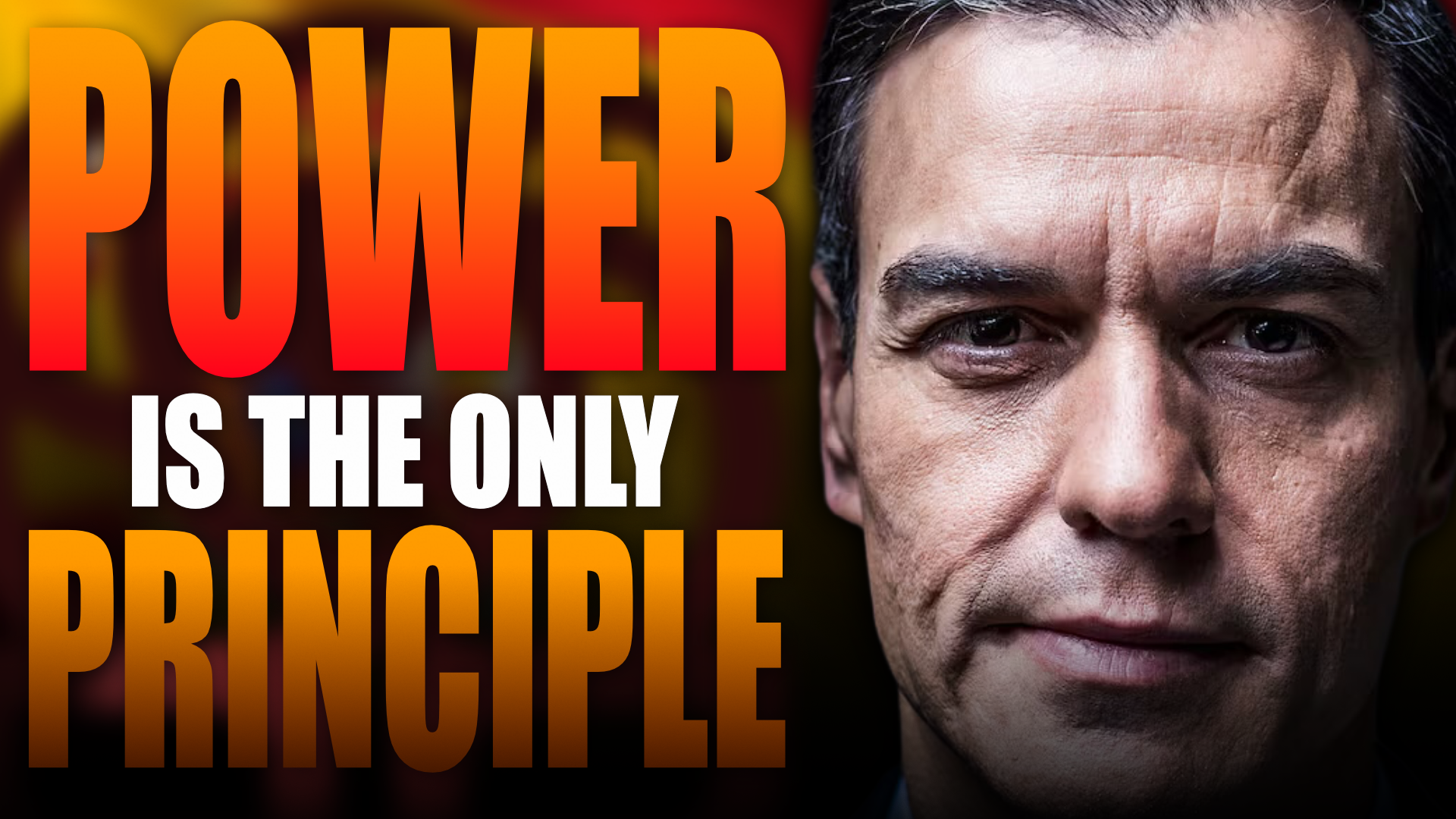
Spanish Political Parties Series, Part 6 of 8
Pedro Sánchez only got into Congress in 2009 and 2013 because colleagues ahead of him on the PSOE list resigned, and in 2011 he was placed too low on the list to win a seat at all. A year after he came back as a substitute he was secretary general of the party. In October 2016 the party’s federal committee resigned all together to force him out, which had never happened before. Eight months later he had won the leadership back, and by June 2018 he was prime minister. He got there through the first successful motion of censure in Spanish democracy, without a seat in parliament and leading a group of only 84 members of parliament. In this last episode of our three-part series on the Spanish Socialist Party, Diego and I trace that path from deep in the back benches to Moncloa. We ask what it tells us about the man, about the party, and about the institutions he now controls.
The timing matters. Sánchez has just called a snap general election for November, and the gap between how he is seen abroad and at home is wider than for almost any other European leader. As Tyler Cowen likes to say, context is that which is scarce. Foreign coverage sees a strong economy, a progressive leader, and a country still read with worn-out tropes through the Civil War. It rarely sees how Sánchez actually operates, and this episode tries to fill that gap.
Sánchez’s method starts with something he understood about Spanish parties. A leader who goes over the heads of the party machine can take everything with the votes of fewer than 200,000 members, who are far more radical than the people who run the party day to day. In fact, he did it twice. The first time was in 2014, with the backing of Susana Díaz’s Andalusian federation. The second was in 2017, when he toured the country in a Peugeot 407 with José Luis Ábalos, Santos Cerdán and Koldo García. Then he rewrote the party statutes so that no committee could ever remove him again. The same reasoning took him into government with partners he had sworn off. These were Podemos, who he once said would keep him from sleeping at night, Bildu, the political heirs of ETA, and the Catalan separatists whose leader he had promised to bring back to stand trial. In the end he gave them an amnesty.
We spend a good part of the episode on that amnesty and what it shows about the Spanish state. The law went to Congress as a proposición de ley (a bill introduced by parliamentary groups). That route skips the Consejo de Estado’s opinion and the impact assessments a government bill must carry. It passed with 177 votes after a Senate veto that can only delay a law. The Constitutional Court then upheld it six to four, and one of the six was Juan Carlos Campo, the former justice minister who had once said an amnesty would be unconstitutional.
From there we turn to several other institutions.
The attorney general, convicted by the Supreme Court for leaking a private citizen’s tax negotiations
José Luis Escrivá, appointed governor of the Bank of Spain straight from the cabinet
The CIS, the state polling office, under José Félix Tezanos
The state broadcaster
The judges’ strike of 2025
Our conclusion is uncomfortable for anyone who relies on constitutional design alone. Rules and courts work only as well as the people willing to respect them. A government with no scruples about using them can get around every check that was meant to stop it.
We look just as closely at the economic record. The minimum wage has risen 61 percent in total while the median wage has stayed flat, which has compressed the whole pay scale. In 35 of Spain’s 50 provinces the minimum wage is now effectively the typical salary. The 2021 labour reform reclassified seasonal workers as fijos discontinuos (permanent workers who work only part of the year), which made the unemployment figures look better. Pensions were tied back to inflation, so a quarter of Social Security spending now depends on transfers from a budget that runs a deficit. Rent controls and limits on tourist flats arrived at the same time as roughly four million new foreign-born residents and a citizenship law that has drawn more than two million applications from abroad. The young pay for most of this, and they now vote heavily for Vox and the PP.
The last part of the conversation turns to the courts, where the men from that Peugeot now face serious criminal charges and two of them are in prison. We cover the following cases.
The cases against Ábalos and Cerdán over public contracts
The conviction of the prime minister’s brother over a job created for him in Extremadura
The charges against his wife, Begoña Gómez
The investigations involving former prime minister Zapatero
The party operative Leire Díez, whose campaign against prosecutors, journalists and judges is now before the courts
By Diego’s count, some 40 judges are investigating matters connected to the party.
In our view the word we most associate with the Spanish Socialists is power. Spaniards often derogatively call the party la PSOE, in the feminine, instead of the correct el PSOE. Why? Because of la Mafia. It is said that the 1980s Alfonso Guerra promised that after the Socialists had governed, Spain would become unrecognisable even to the mother who bore her. Whatever happens in November, Sánchez has made that promise truer than Guerra could have imagined.