
Full transcript below
In this episode of Somewhere/Anywhere, Diego and Rasheed step outside the studio and into the home of one of Europe’s most important classical liberal thinkers: Pedro Schwartz. What follows is less an interview than a conversation across generations about freedom, institutions, and the intellectual life of modern Spain.
Schwartz’s life traces the arc of European liberalism in the twentieth century. As a young Spaniard coming of age under Franco, he left a closed country and found himself at the London School of Economics, studying under Karl Popper and alongside some of the great figures of modern economic thought. Those formative years exposed him to a cosmopolitan intellectual environment that would shape his lifelong project: bringing the traditions of classical liberalism —Popper, Hayek, Friedman, Robbins — into Spanish intellectual and political life.
Over the decades, Schwartz became not only a scholar but also a conduit of ideas. He translated, introduced, and debated liberal thought in Spain when it was still intellectually marginal. His influence extends through generations of economists, journalists, and policymakers, many of whom first encountered liberal ideas through his seminars, essays, and public interventions.
The conversation moves fluidly between intellectual history and lived politics. Schwartz reflects on the intellectual atmosphere of the LSE in the 1960s, the role of the School of Salamanca in Spain’s liberal tradition, and his encounters with figures such as Friedrich Hayek and Milton Friedman. At the same time, we revisit decisive moments in modern Spanish history: the democratic transition, the 1981 coup attempt, Spain’s entry into NATO and the European project, and the reformist wave of the 1990s.
Schwartz also speaks candidly about his own brief experience in politics —founding a liberal party, serving in parliament, and influencing the policy debates that helped shape Spain’s market reforms. Yet he ultimately returns to the role he values most: that of the public intellectual who helps societies clarify their principles.
Throughout the episode, one theme recurs: liberalism is not simply a set of policy preferences but a civilizational inheritance. It requires institutions, intellectual seriousness, and a broad cultural horizon — one that ranges from economic theory to philosophy, history, and literature.
At 91 years old, Pedro Schwartz remains engaged in that project. This conversation is both a reflection on a remarkable intellectual life and a meditation on the enduring challenges of defending freedom in democratic societies.
Diego: So welcome everyone to yet another episode of our Somewhere/Anywhere podcast. We are coming to you from Madrid, but not from our studio, but rather from the residence of our very distinguished guest in today’s podcast recording. So I’m joined, of course, by my cohost and friend Rasheed Griffith. Rasheed, how are you?
Rasheed: Hello, Diego. How are you doing?
Diego: Very well myself excited about today’s recording. We are about to host an interview with Pedro Schwartz, who is one of the most relevant thinkers of the classical liberal world in Europe and obviously in Spain. And it is truly a privilege for us to be speaking to him today. Isn’t it?
Rasheed: Yes, I’m very excited and looking forward to the conversation. It’s surprising how many people I come across in my kind of liberal life in the US or the Caribbean, who know of Pedro Schwartz, I think from his Cato publication, actually. So I think it’s gonna be good to hear him in person now in English.
Diego: Well, before we introduce Pedro formally, although he’s sitting right next to us right now, let us just tell everyone that Pedro had a very remarkable career as an academic. He was also involved in politics at some point as well. Of course, his voice is one of the more popular in the classical liberal sphere. He has been instrumental in the diffusion of liberal thought.
He was a student of Karl Popper. He was the president of the Montparnasse Society. His credentials are certainly those that you only come across once in a lifetime. We are truly honored to be here with Pedro. I don’t mean to extend this too much because Pedro is blushing right now, but yes, Pedro, welcome to the interview.
Pedro: Thank you very much for this interview. I hope to be up to standard.
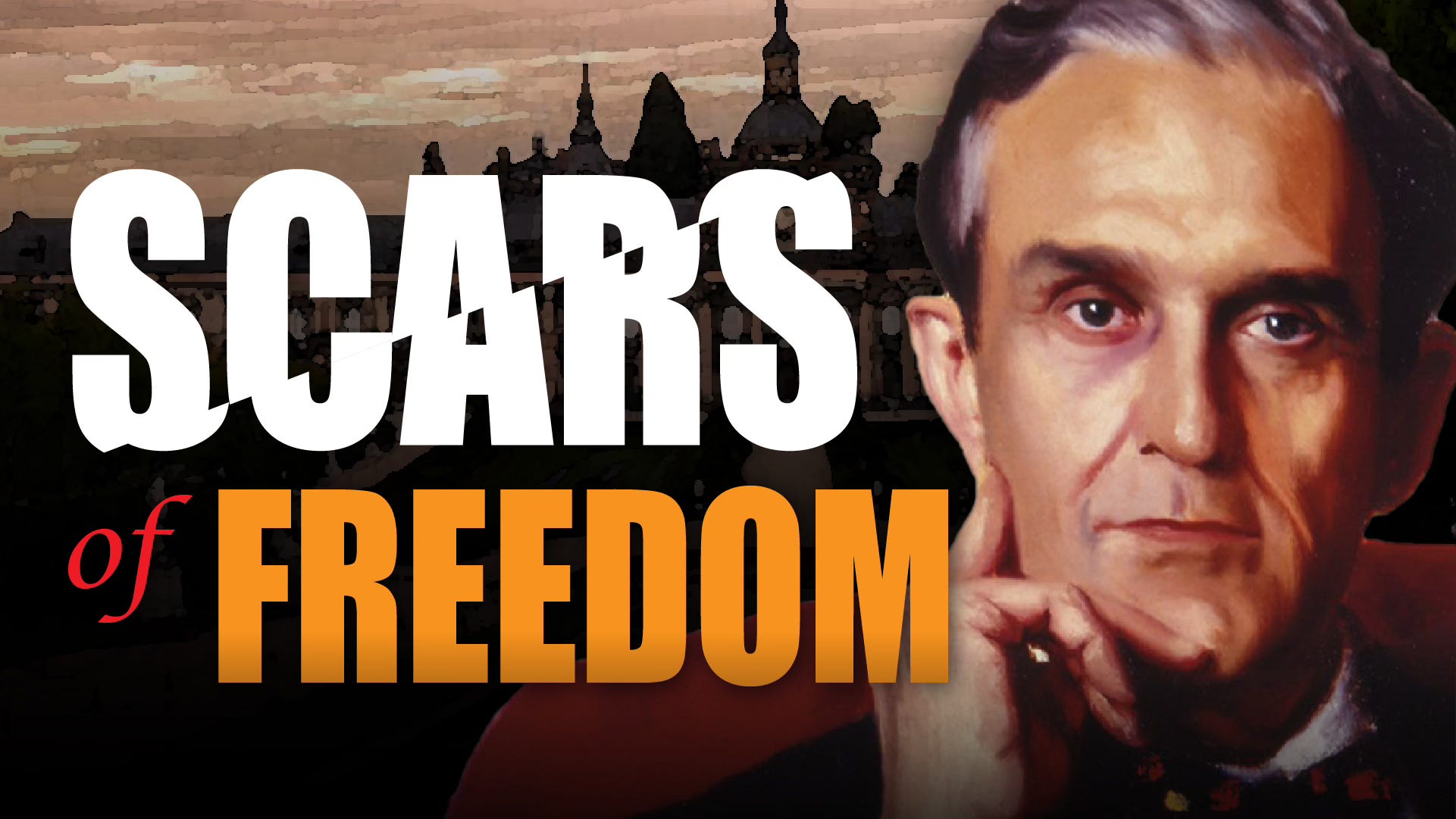
Diego: Let’s jump into it. By the way, we will be using Pedro’s “Las cicatrices de la Libertad”, his biography, as a kind of guiding point. So for our Spanish audience or Spanish reading audience, that is a good companion to today’s interview.
Rasheed: Pedro, I wanted to focus initially on your time in England. Of course, I, coming from the Caribbean, have a much more vivid appreciation of England during this time period in my own history. I believe that from your book, your first time in England was around 1953/54, when you went to learn English. What was that experience like for you the first time?
Pedro: Well, it was a big change and surprise because I came from Spain. At that moment, there was very little freedom in Spain, and I was sent by my father to live in Spain because he wanted, and I wanted to be a diplomat. But when I passed the exams, they were difficult, but I passed them. I was told by the people on the examining board that they sadly couldn’t have me as a diplomat because I wasn’t enthusiastic about Franco, and it was well known that I had been an activist student. I went on to perfect my English in the United States, not in the United Kingdom. And then after I was here for many years, because I was a student at the London School of Economics, it turned out that I’m very much pro-English. You can ask me questions, i’ll tell you what I think.
Diego: We very recently held an interview with Esperanza Aguirre. She spoke of the 1980s when she became involved in politics. She, of course, considers herself to be a student of yours and referenced the influence of British tradition. You were a student there in the London School of Economics under Karl Popper, nonetheless.
Pedro: I was indeed. That was very lucky. I found very good teachers there at the London School of Economics when I did my PhD, and stayed there for I think seven years. I worked with Karl Popper, and I was pretty active there, so I’m both Spanish and British.
Rasheed: I’m curious about your intellectual growth at the time of LSE. It was the early sixties in LSE, when Sir Arthur Lewis was there, when a lot of the changes in the imperial system of the UK were happening, and the entire “colonial experience” was heating up in London. I’m curious, how did that affect you when you were thinking about economics and those topics?
Pedro: Well, the way it affected me... I learned my economics and also my politics from the people I met at the School of Economics. And there I was, pretty active.
For some time, I was the head of the Students Association, and therefore, I was very active, and I admired what I found there and thought I would apply it in Spain if I could.
Diego: It should be noted that today ideas travel very fast. We have to put ourselves in the shoes of someone who, 70 years ago, was traveling in a world from a closed country, traveling away from it, and setting himself in the center of European cosmopolitanism, like London.
So it was definitely a culture shock, but one that you fully embraced because you had that inherent drive for freedom internally.
Pedro: Indeed. What I found is that I could apply the things I was learning in London, in Spain. At the moment, we didn’t have political freedom in Spain, and it was easy for me to translate.
“Let’s have the same thing there.” I even became an MP in the Spanish Parliament, and in general, was very clear that I wanted freedom for my country, and I was then, how could I say, a little more in favor of socialism than I was there.
Diego: I believe John Stuart Mill plays a key role in your thoughts at this stage of your life.
How did Stuart Mill’s thinking influence you, and how did you later drift away from some elements of it?
Pedro: Well, I studied John Stuart Mill and decided to write a thesis about him, which I did and published. It was Karl Popper who told me, “Why don’t you do something on Mill? Why don’t you do your thesis on John Stewart Mill?”
So I did. I followed the advice he gave me, and I wrote and published a book on John Stuart Mill. And I found very many things to learn and to imitate about John Stuart Mill, and with the help of Karl Popper and also Lionel Robbins, who was the head of the board that gave me the PhD. So in the end, I learned from Popper, from Lionel Robbins, and many other people there.
And also John Stewart Mill, who is a very broad thinker, and I think there was lots I could learn from him and apply in my country. Not only in my country, but in general, to organize things in any country.
Rasheed: Why did Popper give you the advice to study Mill?
Pedro: Well, I remember I saw Popper’s “The Open Society”, the book, at a bookshop here in Madrid and bought it.
I bought the book, read it, and didn’t really understand what he was saying. Though at one point I was going to have lunch, and at one door I saw a little name, ‘A.R. Popper’. So I went in. And said, “Are you AR Popper of the Open Society?
He said, “Indeed.”
“Can I come to your lectures?”
He said “Yes, you can.”
And so I went to his lectures and followed, studied a lot of Karl Popper’s thoughts.
Diego: For many of us today, who consider ourselves to be students of the liberal tradition, these authors are unfortunately long gone. But the truth is that you were not just a very intellectual thinker through the years, but also someone who was acquainted with many of these individuals. For instance, you brought Karl Popper’s ideas to Spain, facilitating his translation. You even brought him physically!
Yeah. And, uh,
Pedro: I remember how I drove a little Fiat and took him to different parts of Spain.
Diego: Yes. North of Spain, I believe. Right?
Pedro: That’s right. And in general, it was not only learning what Popper and John Stuart had to say. They transformed the way I saw the world. I had very, very good teachers.
I was very lucky in the people I studied with, not only Karl Popper and Lionel Robbins, but many others at The London School of Economics, which changed my view. And little by little, I moved away from interventionist liberalism to become a real classical liberal in a sense.
Rasheed: I’m curious about, call it the critical intellectual distinction, between your training in economics and then law, when it comes to adopting a more liberal approach to politics or to society.
Pedro: Yes. Well, I studied law and was bored by it. Now I repent because the law is very important, as we know from Hayek’s books too. Laws are very important, so I slowly moved to study law more deeply. Karl Popper’s lectures also had some influence from him about how to organize a country by thought as a liberal person. And so I didn’t look back after that. I remember Karl Popper’s lectures very well, and they were very, very interesting. In fact, perhaps i’ll show you later, his piano is at the house because it was given to my wife, by him, by Karl Popper. And we’ve just repaired the piano.
He really was a very important person, I should say, a friend. He met my children, of course, and my wife. He left the piano in his will, and here we are. The piano, I don’t play. My wife does, and also my daughter, who’s a singer. And so there’s a lot of music in this house.
Diego: One thing that I shall say is that, beyond bringing that British tradition to Spain, Pedro was also instrumental in channeling other ideas from the liberal realm into the country.
Because in Pedro, you have not just a thinker with his own entity and body of work, but also someone who was a student of the Public Choice School, of the Chicago and Monetarist School. You’re also a very acquainted intellectual in regard to the Austrian tradition. So you have a little bit of all of those, and you have played the role of a curator of sorts by not just developing your own work, but also facilitating the importing of this thought into Spain.
Pedro: Indeed, I was instrumental in bringing many ideas back here. Not that I am the cause of them, I learned them. We have a great deal of influence from all these thinkers whom I have diffused here in Spain and have become a sort of instrument to discuss liberalism.
Diego: I must say that I myself was a regular attendee at Pedro’s seminars at the university back when Pedro was finishing up his more active years in academia. So I also consider myself to have learned a lot from Pedro, being one of the younger members of that club. But if we think of the list of people who have been influenced by Pedro.
In Spanish academia, intellectual life and policy, you have names such as Carlos Rodríguez Braun, Francisco Cabrillo, and Maria Blanco. These are some of our most cherished and relevant scholars in free market thinking and open society ideas, and also students of Pedro. You imported that LSE, that London School of Economics, intellectual climate of ideas into Spain through many decades, and you’ve touched many different generations with your work.
Pedro: Yes, indeed. Many people consider me as one of the influential liberals here in Spain, and as time passes, I become deeper in that kind of thought.
I’m not really deep in learning thought, but it’s also had some consequences for my life. As I told you before, I wanted to be a diplomat. I passed the exams, and they told me, “No, we don’t want you as a diplomat.” Thank goodness I became a student. I became a philosopher in the sense of freedom, and that has favored me forever and influenced me a great deal. So it’s not only the kind of liberal thought that you get at the London School of Economics that I learned and then passed on to Spain. All those who wrote their thesis with me, I’m very proud of, as well as the people who followed me at the time.
Rasheed: So, beyond the simple academic intellectual aspect of politics and freedom, you were an active part of the Congreso, the Parliament here in Spain. Why did you decide to actively go into politics?
Pedro: Well, it’s a question I asked myself. Now that time has passed, I think it was a mistake in the sense that being a politician is a very special thing.
You have to bow to ideas that you may not want to. And so I became an MP here, and I was very vocal indeed, even founding a political party. And that stayed with me because I was one of the members of the conservative party here in Spain. And now with the passing of time, I have become a source figure in liberal economics, in liberal political thought.
And that, I think, has been my main contribution to Spanish life.
Take it down. (Pedro gestures to a nearby photo)
Have a look.
Diego: Okay, so we are looking at a Liberty Fund meeting, a picture of it. It was organized by Kurt Leube in the late 1980S. We see a young Pedro Schwarz wearing a red vest, and beside him, it’s Peter Bauer, and Kurt Leube.
Pedro: Look at those!
Diego: Friedrich Hayek, Ronald Coase, George Stigler.
Rasheed: My goodness.
Pedro: So it’s a very special photograph of one of my activities as a student of liberalism.
Diego: We shall add this picture to the podcast so that everyone can take a look. I always think you are a bit too critical of your time in politics.
Let me tell you why. I obviously understand that it is certainly not the place for someone who wants to keep his independence, certainly not in Spanish politics. But I don’t know where the center-right reforms from the 1990s would’ve come if there had not been an intellectual structure that ingrained itself into the popular party machinery.
So in a sense, I think that what Aznar culminates in the 1990s is a byproduct of you setting up a small liberal party, which then became a founding element of the new Popular Party. So I understand your hesitations about that period of time. I agree with the self-criticism, but I think you are leaving out of the equation some very important contributions.
Where would the Spanish right wing be, economically speaking, if it weren’t for that?
Pedro: Well, not only that. I voted for NATO at the time when there was a lot of discussion about NATO. And I voted for it, and in fact was punished in the right wing of Spanish politics.
Diego: For context, they wanted to abstain for tactical reasons, just because they wanted to hurt the socialist government.
But Pedro said, “Well, based on principle, we can’t be tactical about something as relevant as NATO accession.” And this led to your demise in politics.
Pedro: It led to my demis,e and I’m very proud of that.
Diego: As you should be.
Pedro: Because I foresaw some of the things that are happening now. So I was very much for NATO and the sort of politicians that were in favor of defense, in favor of attacking or setting aside the people who were socialists. And we wanted to establish freedom, not only personally, but also militarily. I am proud of that moment in my political life.
Diego: By the way, there was a certain woman in your party. Of course, she was not known at the time, but she has become a towering figure in Spanish politics.
Your disciple and friend, Esperanza Aguirre.
Pedro: I chose her. I pointed at her when I was the head of a party. I said, “Esperanza, come with us.” And she worked for the party here in Spain, and ever since, very kindly says that I was her teacher. And so we’re very much proud of that point. Politics, NATO, Esperanza Aguirre, and the defense of freedom are some things that I was able to foster.
Rasheed: Well, that seems like a pretty accomplished entry into politics. Very successful. When you think of the general calculation, one can make on that. You mentioned you founded the party.
Diego: Union Liberal.
Rasheed: What was this particular reason at the time when you said, “We need to have a different kind of party in Spain.”
Why did you do it?
Pedro: I was very much at the end of my time at the LSE, a believer and defender of economic freedom. And so I wanted the new party that was being organized by Aznar to become a defender of freedom. It was made, and he’s still remembered as somebody who changed the way that we see economic policy here in Spain.
I was very much in favor of economic freedom, which is something that many people didn’t accept here, and they did once I founded this small party, and then it fused into the conservative right. And so if I’m asked what things I achieved as a politician? NATO, economic freedom, and the influence on the conservative right.
Diego: There is one element here that is interesting to note. It’s very hard to think about it these days, considering the way our current government is operating. But in between 1982 and 1986, there were some reformist policies enacted by a socialist Minister of Finance, Miguel Boyer, who was later known for being married to Julio Iglesias’ former spouse and whatnot.
But at the time, between 82 and 86. He did approve some reforms that in principle resonate with the ideas you were defending, like liberalization of business hours, liberalization in housing, which were later taken down by his own party, of course. But this was an interesting situation in which we have probably the most liberal socialist ever in the Spanish parliament, competing with the most liberal MP from the opposition conservatives.
Pedro: Indeed, I remember well when Boyer, who was in the socialist party, defended the idea of freedom of shopping hours and freedom of rental housing and other reforms of that kind. And I was across on the other side, I was within the conservative party. And so what I did after he’d spoken, I crossed the floor and congratulated him.
He’d finally done something very good, and that congratulations wasn’t quite popular with some of my friends.
Rasheed: I wanna go back a few years before that, which is the transition period in Spain. And of course, now from the outside, inside even, there’s still a lot of debate about the correct way it should have happened, the different counterfactuals.
I’m curious, from your perspective, living through it, participating, helping, how did you see the process of the transition being productive?
Pedro: One thing that explains it is that I was a monarchist, and I defended the idea of a king because I thought it was a defense against many mistakes that could have happened.
If I want to pick up the things that I did right, one of them was defending the idea of a king, which we did, and now he really has made a difference in Spain. I had met him and tried to help him whenever I could, and he now still calls me Pedro, something I remember.
Diego: King Juan Carlos has been, of course, involving some scandals. At the same time, this last week, as we’re recording this, the papers from the 23-F, which was an attempted and failed coup d’état that happened in 1981, one year before Pedro became an MP, have been released by this government.
One could speculate a lot about the reasons why they are declassifying these files now, but beyond that, these files paint Carlos in a very positive light, which sort of resonates with the idea that “yes, we can second guess some elements of the transition now, but most people that lived through it are actually pretty proud of what was accomplished then.”
We’re sitting here with someone like Pedro, who was essentially not allowed to pursue his own career as a diplomat by the regime. And for someone like him to question the role of the monarchy as a facilitator for democracy would be a no-brainer because it brought forward freedom.
Pedro: Indeed, indeed, I remember when that coup happened.
I was in Barcelona putting forward the idea of my party. I was giving a lecture. I finally saw people listening to the radio. A guy said, “Come on!”
“Please, you be a little polite to me. What are you doing?”
And he said, “There’s been a coup.”
And I remember well how King Juan Carlos appeared on the television screen, saying to his officers, the officers of the Army, “Obey me. Don’t you dare go against democracy!”
And I remember saying to myself, “Oh my goodness, not again. It can’t happen again. We had Franco once, we didn’t want to relive that.” I remember him in full uniform, telling the officers who were staging the coup, “ Will you please go back to barracks?”
And the tanks were there. The tanks were in València, so it wasn’t an easy thing to do. And this was a very big step for us. We are now a democracy in Spain. You may criticize some of the things that people do, but we do need to have the voice of the people heard. And that is something to be defended.
Diego: Both Rasheed and I are supposed to have an episode at some point about the monarchy. I just want to throw out there that the two most notable attempts against Spanish democracy were de facto stopped by the monarch. It was King Juan Carlos in 1981, and it was King Philip, the current king, in 2017 when the separation was attempted by Catalonia, which many would consider to have included elements of a constitutional coup as well.
So I think that there are great arguments that one can put forward in theory. In practice, however, the monarchy has remained instrumental for freedom in Spain, or at least that is my take.
Rasheed: But I’m curious at the time of the transition, why did you support the monarchy as a tool for democracy?
It would seem a bit counterintuitive.
Pedro: Well, in part, it was an inference for my family, who had met the monarchy group in Switzerland. And also because I thought in Spain we needed to return to something that wasn’t an absolute way of considering the Spanish politics. We needed to have somebody who would pull together the people who had been in favor of Republicanism this time and so on. We were a small group of people who thought the monarchy was a kind of institution that you need in a country that is a loggerhead with itself.
And indeed, yes, we have a king. We can see that as something very lucky, a very good thing. So that’s another good thing I did!
Diego: A lot of people are actually fascinated by the process that led to political change in the nineties. Even Rasheed and I, alongside Manuel Llamas are currently doing a lot of research and perhaps preparing a book about these specific years. Your name has come up when we talk about who was involved in the closed-door discussions on how to articulate a center-right, free-market alternative policy. Can you walk us through this timing in which, in the Fundación FAES, in the circles of PP in 94’, 95’. You can smell that political change is coming, but you need a plan. You need a program, and you were involved there as well.
Pedro: Yes, indeed. I think that we don’t underline how wonderful it was that we had a change. After all, a king is a funny thing, and you want a king when you have a democracy. Having a king and a democracy seemed to be at loggerheads, and what we needed was somebody who was above the political fights that had happened in Spain, even during the Republic in the thirties. There were a number of people who thought that if we had a king who was above politics, who could make us stop fighting each other. And that I think has proved to be so well.
People have criticized Franco very much, but he was the one who wanted a king here in Spain, and he was quite right. It was a good thing to have somebody above politics. It seems that Franco was talking to one of his ministers one day, an economics minister, and the king said to his minister, “Don’t get into politics.”
Diego: “ Don’t go into politics.” Seems that Franco saw himself as being above politics.
In a way, when politics are very partisan and very divisive. This may not resonate with audiences from some countries, like those where coalition agreements and whatnot can be formed. But definitely in a country like Spain, where unfortunately, there is a lot of partisanship, that mediating factor has remained relevant.
But I don’t know if you want to keep this a secret, or if you forgot to answer my specific question, but I am very interested to know about your involvement with the Aznar preparation of government. I know you played a role there. It’s come up in discussions with the man himself.
Pedro: Aznar was somebody we backed, because we thought he could do the right things, which he did. He established many democratic things, but mainly he was in favor of the sort of institution that is above politics. The king today is not really about politics, and that is something that you have a lot in Europe.
So again, defending the king was a great achievement, not only for me, but for many people.
Diego: Another way in which Aznar wanted to take out too much policymaking from the partisan sphere was by joining the Eurozone.
Now you have spoken a lot and written a lot about monetary policy. You acknowledged, that for Spain, joining the Eurozone was a net positive, and at the same time, you also argued that for the UK, they should be considering a common currency but not a single currency. Because that all obviously depends on your relatives, on what you can expect from the domestic.
Can you walk us through this distinction you made at the time?
Pedro: The idea for Spaniards was getting into Europe to solve many problems in the sense that for many people being pro-European was a way of saying pro-free and pro-democracy. And that was very much the attitude of the opposition here in Spain.
By joining Europe, we forget about the less wonderful parts of our politics. And that was indeed what happened. So being pro-European was not only something that Aznar wanted. Many other people also wanted to join as a safeguard for what we were doing.
Diego: In fact, today, if you look at the economic freedom rankings, Spain’s best scores come in those areas where economic policy is not decided strictly domestically, but also jointly. Take the case of financial freedom, freedom to trade, or monetary stability. Also, another question, Pedro. When Aznar came to power in the mid-nineties, he obviously had a plan.
He has a plan for liberalization in telecommunications, energy, and airlines, as well as privatization of government-owned enterprises. He has a plan to cut spending and cut taxes. What was your role as an intellectual in those years, trying to influence that process?
Pedro: Well, he wasn’t just an intellectual, but also a friend.
I think that many of the things he proposed and carried out were necessary for Spain and have left a sort of tradition that we have for economic freedom. Whatever the President of the Aznar government did has stayed. People really remember the time of economic freedom, and I think we shall go back to it when the time passes.
And so Aznar was, for many of us, a hope and a realization. He went really far in what he did. And now we once again, turn back to him. He left politics, but we go back to his ideas so that we can change the way we do politics and economic policy in Spain.
Rasheed: Why do you think Aznar was so committed to these ideas of liberalization of Spain and was actually able to push it through Parliament?
Pedro: Well, I don’t know. We don’t know why or where he got his ideas. But he certainly got them. And I think there was the influence of his wife as well. Very important. Wives are important!
Diego: They are indeed. One question I also wanted to ask you today is about the time in which your student, in a sense, becomes the governor of Madrid.
While she was in office for a very long period between 2003 and 2011, she accomplished successful tax cuts, spending cuts and deregulation. And all across the board agenda of freedom. You were also, once again, very involved with her, and the net results have been amazing. They are still in place today!
Pedro: Indeed! The influence on Madrid politics was pretty important too. And this is still with us. People still refer to that time of economic freedom as a hopeful one, given the time we’re going through at the moment. So we did influence her. She has said very often that I taught and influenced her.
And she indeed, in that sense, became very pro-economic freedom, and that stayed.
Rasheed: So I’m going to change the gear a little bit, back to the more intellectual aspect of your career. So you made many remarks about how the Anglo-Saxon view of liberalism, the LSE influenced your thinking, and you had brought that to Spain. But at the same time, you’re also well known for your work on the School of Salamanca type histories and work.
I’m curious as to how you see that aspect of liberal thinking. How does it relate to how you learn about liberalism in England?
Pedro: Liberalism in England is in a difficult time, I should say. Therefore, the influence of the economic freedom of the School of Salamanca and other things that would be referred to as parents, the idea about it, men, but many others in the liberal school that have come to say, and that is something that has influenced the politics of Spain much more than people think.
People are growing impatient, and voters are impatient with the kind of mistakes this government is making. And therefore, I think that period, not only of Esperanza Aguirre, but also of the liberal club and other ideas in defense of pre-trade and pre-economics, is something that, thank goodness, is here to stay. And we will go back to them as soon as this very difficult period we’re going through finishes.
Diego: That anchorage effect of the school of Salamanca it’s relevant because at the end of the day, it is a way for Spanish liberals to not just simply accept foreign thought, which of course is far superior in many cases, but also to anchor your own intellectual history to some elements that came before you, such as the Cortes de Leon or the writing of the Scholastics back in the day.
But it should be noted that this tradition has been rediscovered. For instance, the Marjorie Grice-Hutchinson book about the School of Salamanca, from the 1950s, is when Pedro is essentially stepping out of Spain to learn at the London School of Economics. So it’s interesting to see how today a Spanish liberal can relate more to 16th century Spanish liberals, than they did back in the time.
Pedro: Indeed, the liberal thinking, liberal economics competition, and an open system are things that are here to stay because of that period. When we helped introduce those ideas into Spanish life, I remember the great fight that we had to face was, people who said they were liberal, but they were really interventionists. Now people agree that we have to do something different. So we must have the tradition, this short-run tradition of free economics, liberal thinking. For the moment, it seems worth it, despite the kind of government we have.
Diego: We will have to speak about this government.
Pedro, of course, has made several references to this, and it comes very naturally to ask. Pedro has been involved in the diffusion of ideas in different roles. He has authored books and literally hundreds of op eds for different newspapers. He even brought Milton Friedman’s ‘Free to Choose’ TV documentary to Spanish television alongside a student of his very renowned scholar, Carlos Rodriguez Braun.
How important what do you think is the role of a journalist?
Pedro: Well, it isn’t a journalist. I would not call it that. It’s simply somebody who writes essays. But here we have a photograph of Milton Friedman and George Stigler. It’s curious that in that photograph, Milton Friedman is in the middle with other people listening to him. The idea of being in favor of free economics, free trade, is something that has come to stay in Spain, mixed a bit with the hope that Europe will find its way. But in any case, I think it’s something that has really struck roots.
Diego: I also wanted to ask you about your book, a fantastic essay, which, if I’m not mistaken, was originally your speech to become a member of the Royal Academy of Political Science and Morals.
It is being labeled as “In Search of Montesquieu” (En busca de Montesquieu), and you have expressed through the years that, at the end of the day, the difficult conquest that is freedom needs those institutions and this limits and provisioning of power.
Pedro: Yes, you need to be able to look at the back and to remember what your traditions are. And people who fight those ideas of freedom are not so important in Spain because for a long time we’ve been working with Montesquieu, with Milton Friedman, and with others.
We’ve been working to establish the roots of free economics. It is here, it stays here. I think that again, it is a very good step forward.
Rasheed: Coming now to the end of the podcast... One of the topics that we discuss a lot is the problem of the young liberals not really reading that much and discovering these more cosmopolitan ideas of history and thinking.
The start of your last book about your life, the monograph is a Chinese quote, a Greek quote, a Spanish quote. It really makes my point here. In your generation, this idea of a broad view of the world was so important. Is it still so important to have broad reading?
Pedro: Yes. I think, how can I say, the temptation for people who think of freedom and defend freedom, both economic and political, is to fight each other and to say, “Look, I’m different from them. Look at this small group, they are somebody we have to fight.” And I think that is something that we have worked well here, where people in favor of freedom are together and work together.
And that perhaps is something we can teach other people. Britain is one of them where we need to have a different way of organizing society, and that, here again, is something we have struck roots with. Here in Spain, we have liberals who have different ways of understanding society. But we are not fighting each other; on the contrary, we’re more or less, even with our differences, going forward in what is more traditional with our political and economic thought.
Diego: I wanted to ask you about your relationship with some of the most relevant thinkers of the past century. We’ve spoken about Karl Popper already, but you also dealt with Friedrich Hayek and Milton Friedman.
Any anecdotes or stories or just overall opinions of your dealings with both Hayek and Friedman that you could share with us?
Pedro: Well, Milton Friedman has a great deal of influence in Spain because of his television program. It’s something that has left a mark on the way we see freedom here in Spain.
So that’s one thing that goes well. And I remember Milton Friedman, coming here, being attacked, but defending himself because he was wonderful and replying to what people said about him. And then you had the same with Hayek. I remember when we went to Salamanca, and he was there. He was in the chair of the School of Salamanca, defending the idea that if you have confidence in people, then you have confidence in freedom. And the idea that being a liberal means that you tend to believe that people will, in the end, defend what is right, is important. And Hayek was a difficult person, but what he’s writtenhe wrote about the philosophy of freedom is something that stays with us forever.
Diego: Pedro, this would probably be my last question to you. You’ve made several references so far to the challenges that this current government in Spain has created for us. I think that we obviously can identify economic issues, minimum wage increases that are completely blown out of any proportion, and tax increases by literal hundreds.
But the one thing I am more concerned with is the hindrance of the rule of law and the power grab of many institutions of the Spanish democracy. So how do we go forward? If there is a new government in place. What are the priorities?
Pedro: Well, the priority is to obey the constitution.
We have a constitution that should be obeyed. Instead, it’s being attacked. It’s being seen the wrong way, mainly by special socialists who are in power. The socialists have no qualms about attacking freedom. So again, we are lucky to have the 1978 Constitution. Difficult at times, but what we have is the reference for how we have to organize our lives. Not easy, but we can do it. And the basic ideas are there. Seriously, people go back to the Constitution! We need politicians to obey the constitution and to push it in practice. And this is something that sometimes seems to be in danger, but I think the opinion of Spaniards in general is in favor of establishing a free constitution and defending it.
Rasheed: I guess I’ll have the final question, and because it is the final question, I have a very different kind of question. I’m curious, in your opinion, at 91 years old, you’ve done quite a lot, of course. There are some references, I’ve found while reading your books, your views of art and music.
The literature in general is quite wide, as you can see, even right here in your library. What pieces of music or art do you still really enjoy today?
Pedro: Oh, very clearly history, because I taught history. Going back to earlier centuries is something that resonates with people still.
Sometimes wrongly, because some people are thinking of splitting Spain into many different systems, and that is not helping us. You are showing the book there, and so this again, is a book about the traditions of freedom, a very old tradition of freedom in Spain.
The word liberal was really first used in Spain when Napoleon invaded us. Therefore, the idea of a liberal is something that has a tradition behind it, and that’s very important in politics. So that’s something now we are able to defend, and that’s what I try to defend in my book.
Diego: I want to close by saying two things.
First of all, Pedro has always said that there is still a lot of work to do. That is why even today, he’s wearing his boots, writing, and actively engaging in intellectual debate. For that, I think we’re all very thankful. I also want to say, of course, I’m very thankful for this opportunity, and on a personal note, I certainly could never repay all the learning I’ve done in your seminars, conferences, talks, and writings. You have my gratitude for today’s talk, which feels like a talk between friends. My gratitude for all your work and your fantastic legacy.
Pedro: You’re being too kind. Many people together have tried to establish a different way of doing politics. We may not be very many, but we still are there, and we are a voice in Spanish politics, which ought to be treasured. So, having you here with me, I hope that what I defended is something that resonates with you. I’m very glad and very grateful for this conversation.
Rasheed: Thank you so much, Don Pedro.